
Learning Centre

Ventilation & Respiratory Viruses
Can an HRV Help Reduce the Risk of Flu and Other Respiratory Viruses? Respiratory viruses may spread in particles released during breathing, speaking, coughing and sneezing. Adequate outdoor-air ventilation can lower concentrations of airborne infectious particles...

What Does IAQ Mean?
IAQ stands for Indoor Air Quality, the condition of the air inside a building and its potential effects on health and comfort. There is no single universal IAQ number that captures every contaminant. Monitors measure specific parameters or calculate a device-specific...
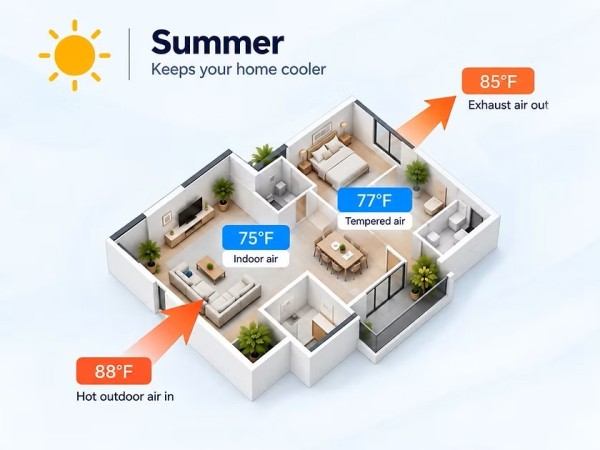
Can an ERV Improve Indoor Air Quality?
Can an ERV Improve Indoor Air Quality? An appropriately sized and operated ERV can improve indoor air quality IAQ by replacing stale air with outdoor air and diluting indoor-generated pollutants. It can also recover heat and exchange some moisture, reducing the energy...
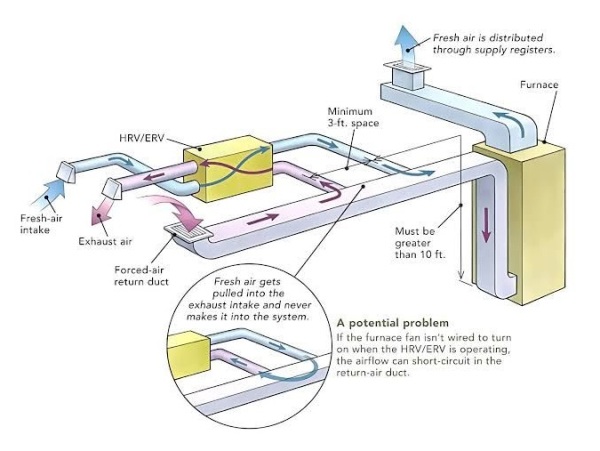
How HRV & ERV Systems Work
An HRV or ERV uses fans and a heat-exchange core to supply outdoor air and exhaust indoor air. Many residential systems are designed to maintain approximately balanced supply and exhaust flow. 1. Fresh outdoor air enters Outdoor air enters through a suitable exterior...
HRV vs ERV
HRV vs. ERV Both HRVs and ERVs bring in outdoor air, exhaust indoor air and recover energy. Their key distinction is moisture transfer: an HRV primarily recovers sensible heat, while an ERV recovers heat and some latent energy associated with moisture. Feature HRV ERV...

Designated for Canadian Climate
Fresh Air and Comfort Through Every Canadian Season Why do Canadian homes need HRV and ERV systems? Canada experiences some of the most demanding seasonal conditions for residential ventilation. From freezing winter temperatures to hot, humid summers, maintaining...