Can an HRV Help Reduce the Risk of Flu and Other Respiratory Viruses?
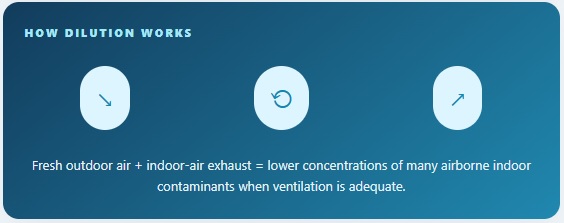
Respiratory viruses may spread in particles released during breathing, speaking, coughing and sneezing. Adequate outdoor-air ventilation can lower concentrations of airborne infectious particles in occupied spaces and may reduce transmission risk as part of a wider strategy.
- Replace indoor air with outdoor air to help dilute suspended particles.
- Use heat recovery to make wintertime outdoor-air ventilation more energy-efficient.
- Maintain appropriate operation and airflow during occupancy.
- Combine ventilation with source control and suitable air cleaning where needed.

What an HRV Cannot Guarantee
An HRV does not prevent infections, eliminate close-range exposure or replace other precautions. Real-world performance depends on outdoor-air delivery, distribution, occupancy and maintenance. Heat-exchanger air leakage and cross-contamination must be evaluated using product data; physical separation does not establish zero leakage. Filtration or appropriately selected portable air cleaners may provide additional protection.
Important: An HRV does not prevent infection or eliminate close-range exposure. Performance depends on airflow, distribution, occupancy and maintenance. Heat-exchanger leakage must be checked against product data.